
 Sudhir Singh
Updated on June 19, 2026
Losing a husband often means losing the family’s primary or sole earner overnight. Widow pension schemes, run by every state under the umbrella of the National Social Assistance Programme (NSAP), exist to give widows a basic monthly income they can rely on. The scheme is known by different names across states: Vidhwa Pension in most of North India, Mukhyamantri Vidhwa Pension Yojana in some states, and similar names in others.
What the Scheme Provides
A monthly pension is credited directly to the widow’s bank account. The base amount under the central Indira Gandhi National Widow Pension Scheme (IGNWPS) is Rs. 300 per month for widows aged 40 to 79, increasing to Rs. 500 per month after age 80. Most states top this up significantly with their own contribution, so the actual amount received is usually much higher.
Pension Amount by State (Approximate)
| State | Approximate Monthly Pension |
|---|---|
| Delhi | Rs. 2,500 |
| Rajasthan | Rs. 1,500 to Rs. 1,750 (age-based) |
| Uttar Pradesh | Rs. 1,000 |
| Madhya Pradesh | Rs. 600 to Rs. 1,000 |
| Bihar | Rs. 400 to Rs. 1,100 (age-based) |
| Haryana | Rs. 3,000 |
| Punjab | Rs. 1,500 |
| West Bengal | Rs. 1,000 |
| Maharashtra (Sanjay Gandhi Niradhar Yojana) | Rs. 1,500 |
These figures change periodically with state budget announcements, so always confirm the current rate on your state’s social welfare department portal.
Eligibility Criteria (Common Across Most States)
- The applicant must be a widow, meaning her husband has passed away and she has not remarried.
- Age requirement: typically 18 or 40 years and above, varying by state. Some states have no minimum age, others start the benefit only from 18.
- Family income must be below the state-prescribed poverty threshold, usually aligned with BPL criteria.
- The applicant must be a resident of the state for a minimum period, usually 5 to 15 years depending on the state.
- The widow should not be receiving a pension under any other government scheme (some states allow combining with limited other benefits, check local rules).
Documents Required
- Husband’s death certificate.
- Aadhaar card of the applicant.
- Age proof (birth certificate, voter ID, or Aadhaar).
- Income certificate issued by the tehsil or revenue office.
- Domicile or residence certificate.
- Bank account passbook copy (account must be Aadhaar-linked for direct benefit transfer).
- Passport-size photograph.
How to Apply for Vidhwa Pension Online
Each state runs its own portal. The general process looks like this:
- Search for your state’s Social Welfare Department or Pension portal. Examples: sspy-up.gov.in (UP), ssp.delhi.gov.in (Delhi), ssp.rajasthan.gov.in (Rajasthan – RajSSP), socialsecurity.bihar.gov.in (Bihar), haryanascw.gov.in (Haryana).
- Click “New Application” or “Widow Pension Registration”.
- Enter your Aadhaar number and verify with OTP.
- Fill in personal details, husband’s death certificate details, family income, and bank account information.
- Upload all required documents as scanned copies.
- Submit and note your application reference number.
The application is verified at the local level, usually by the Tehsildar, Block Development Officer, or Gram Panchayat, before approval. Verification typically takes 30 to 60 days.
How to Check Application Status
- Visit your state’s pension portal.
- Click “Application Status” or “Track Application”.
- Enter your application number or Aadhaar number.
- The status shows pending, approved, or rejected with the reason.
What Happens After Approval?
Once approved, the monthly pension is credited directly to your bank account through Direct Benefit Transfer (DBT), typically between the 1st and 10th of each month. You receive a Pension ID or beneficiary number that you can use for future reference, complaints, or annual life certificate verification, which most states require to keep the pension active.
Frequently Asked Questions
If I remarry, do I lose the widow pension?
Yes. Remarriage disqualifies you from receiving widow pension under almost every state scheme. You are expected to inform the local authority if your marital status changes, as continuing to receive the pension after remarriage without disclosure can lead to recovery action and disqualification from future benefits.
Can a widow receive both widow pension and old age pension?
Most states do not allow you to draw two different pension schemes simultaneously and automatically shift you to whichever scheme gives the higher benefit once you cross the old age pension eligibility age (usually 60 or 65). Check your specific state rules, as a few states do allow limited overlap.
My husband’s death certificate shows a different spelling of my name than my Aadhaar. Will this delay my application?
Yes, name mismatches are one of the most common reasons for application rejection or delay. Get the spelling corrected on either document before applying, or carry an affidavit explaining the discrepancy along with both documents when submitting your application at the local office.
📩 If you notice any incorrect data in this guide or wish to share additional information, please write to us at info@indiansouls.in.
Over 2000+ Government Schemes & Policies Simplified
Indian Souls is your guide to government Schemes, scholarships, pensions, subsidies, job exams, and more. We break complex schemes into easy steps, helping every citizen take full advantage of the opportunities available.
No jargon. No confusion. Just useful info that helps indian citizen.








 Sudhir Singh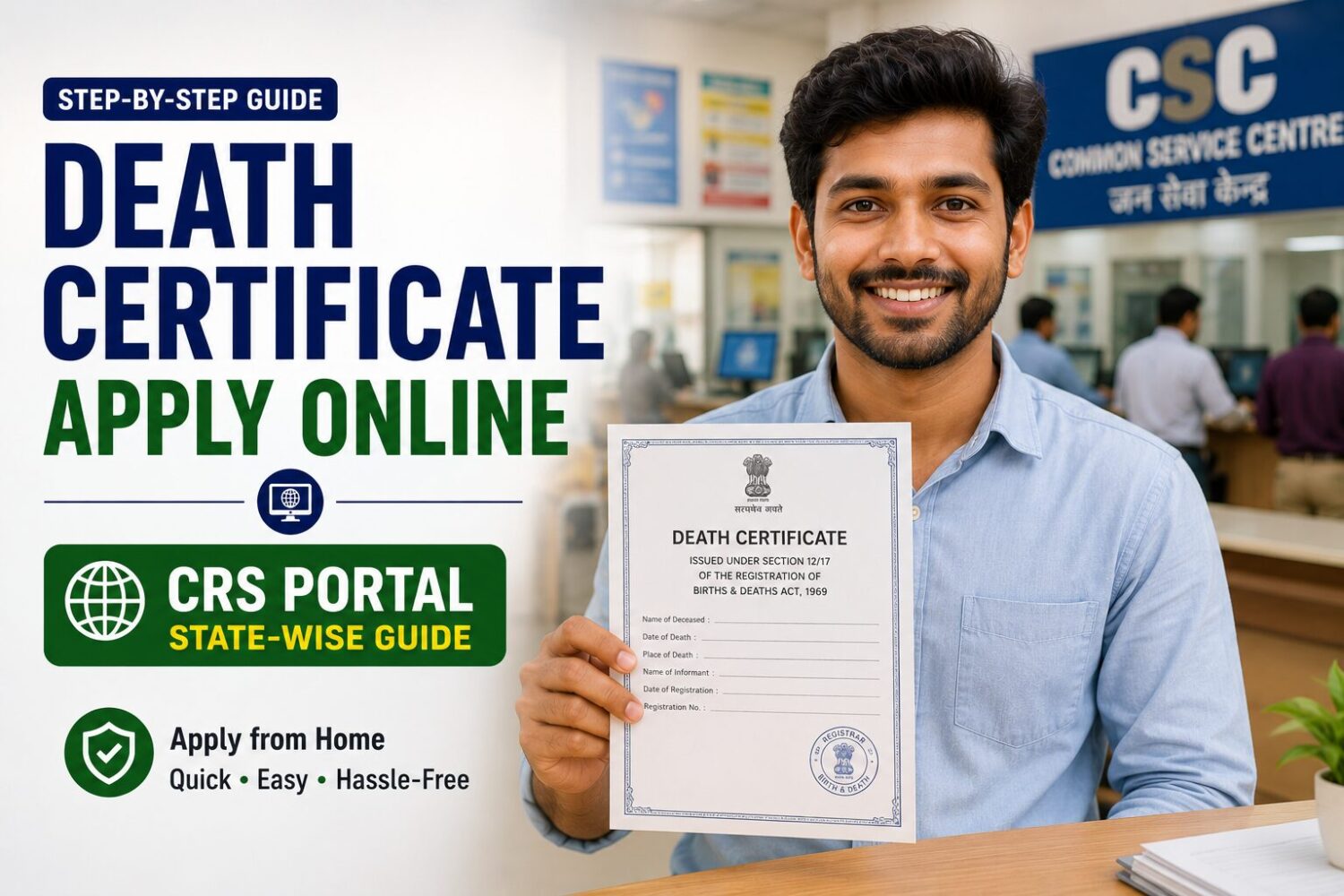











%20of%20₹%2025,000)


%20को%20ड्रोन%20खरीदने%20के%20लिए%20आर्थिक%20मदद)


