
 Sudhir Singh
Updated on June 19, 2026
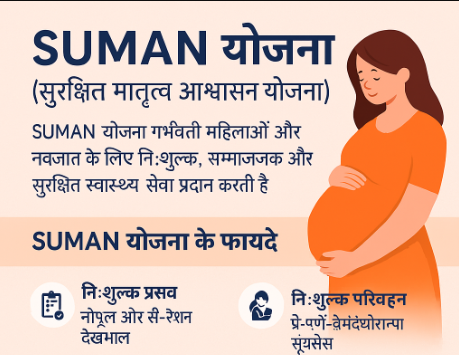
Janani Suraksha Yojana, launched in 2005 under the National Health Mission, addresses a simple but life-threatening problem: many women in rural India were delivering babies at home without any skilled medical assistance, which significantly increased the risk of maternal and infant death. JSY gives pregnant women a direct cash incentive to deliver in a government hospital or accredited private health facility instead, where trained staff and emergency care are available if complications arise.
What JSY Provides
The scheme gives a cash benefit to the mother after an institutional delivery (delivery at a government or accredited health facility). The amount differs based on whether the area is classified as Low Performing State (LPS) or High Performing State (HPS), and whether the location is rural or urban.
| Category | Rural Area | Urban Area |
|---|---|---|
| Low Performing States (includes UP, Bihar, MP, Rajasthan, Odisha, Chhattisgarh, Jharkhand, Assam, J&K, and others) | Rs. 1,400 | Rs. 1,000 |
| High Performing States (includes most southern and several other states with better maternal health indicators) | Rs. 700 | Rs. 600 |
The classification of a state as LPS or HPS is based on institutional delivery rates and maternal health indicators tracked by the Ministry of Health and Family Welfare, and is reviewed periodically.
Who Is Eligible?
- In Low Performing States: all pregnant women delivering in a government health facility are eligible, regardless of age or number of children, including BPL and APL families. This wider eligibility recognises that institutional delivery rates needed urgent improvement in these states.
- In High Performing States: eligibility is more restricted, generally limited to BPL pregnant women, aged 19 years and above, for up to 2 live births.
- Women who deliver at an accredited private health facility (empanelled under JSY) are also eligible, not just government hospitals.
Role of the ASHA Worker
The Accredited Social Health Activist (ASHA) is central to how JSY actually works on the ground. The ASHA worker in your area is responsible for:
- Identifying pregnant women in the village or urban slum and registering them for antenatal checkups.
- Counselling the family on the importance of institutional delivery and the cash benefit available.
- Helping the family arrange transport to the health facility at the time of delivery.
- Accompanying the woman to the facility and staying with her during delivery in many cases.
- Assisting with the paperwork needed to claim the JSY cash benefit after delivery.
- The ASHA worker herself receives a separate incentive payment for facilitating each institutional delivery, which motivates active community-level support.
If you are pregnant and have not yet connected with your local ASHA worker, visit your nearest Anganwadi centre or Primary Health Centre (PHC) to get connected.
Documents Required to Claim JSY Benefit
- Mother and Child Protection (MCP) Card, issued during antenatal registration.
- JSY card, issued at the time of registration for the scheme.
- Aadhaar card of the mother.
- BPL certificate, if applicable in your state classification.
- Bank account passbook copy (Aadhaar-linked, for direct benefit transfer).
- Discharge summary from the hospital confirming institutional delivery.
How the Payment Is Made
The cash benefit is typically disbursed at the health facility itself before discharge, or transferred to the mother’s bank account via Direct Benefit Transfer within a few days of delivery. The exact disbursement method varies slightly by state; some states make on-the-spot cash payments at the facility, while others process it through DBT to the linked bank account.
JSY and Other Maternity Schemes: How They Work Together
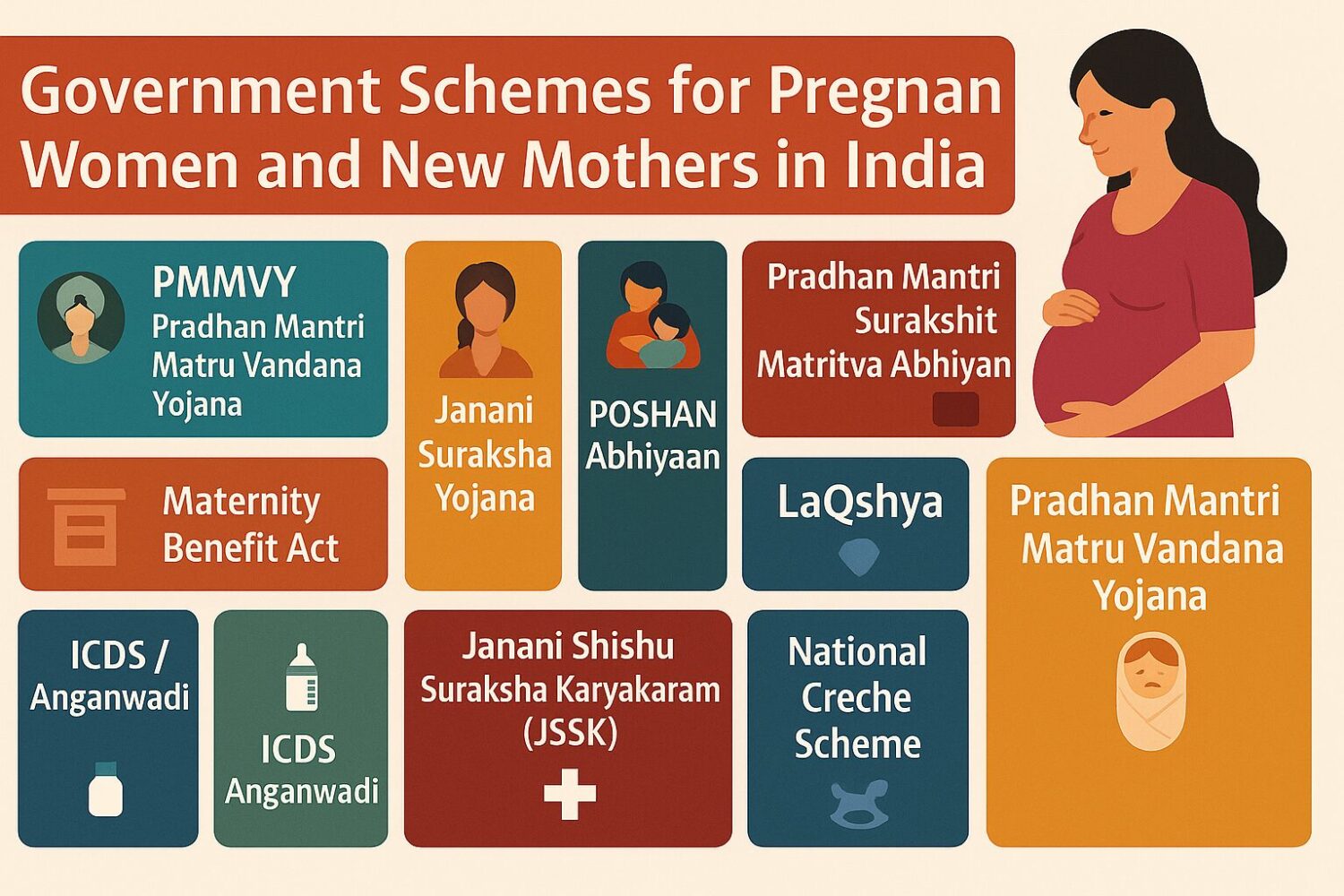
JSY is often confused with Pradhan Mantri Matru Vandana Yojana (PMMVY), but they are different schemes that can both apply to the same pregnancy:
| Scheme | Purpose | Benefit |
|---|---|---|
| JSY | Promote institutional delivery | Rs. 600 to Rs. 1,400 cash incentive after delivery |
| PMMVY | Compensate for wage loss during pregnancy | Rs. 5,000 in instalments for first living child, paid before and after delivery |
A woman delivering her first child at a government hospital can claim both benefits, as they serve different purposes and are processed through separate application and disbursement systems.
Frequently Asked Questions
Can I claim JSY benefit if I deliver at home with a trained attendant?
JSY specifically incentivises institutional delivery, meaning delivery at a recognised health facility. Home deliveries, even with a trained birth attendant, generally do not qualify for the cash benefit under this scheme, as the entire purpose is to shift deliveries away from home settings toward facilities with emergency care capability.
What if there is no government hospital nearby and I deliver at a private facility?
You can still claim JSY if the private facility is officially accredited or empanelled under the scheme in your state. Check with your ASHA worker or the local health department about which private hospitals in your area are JSY-accredited before your due date, so you know your options in advance.
Is there an age limit to claim JSY benefit?
In High Performing States, the benefit is generally available to women aged 19 years and above. In Low Performing States, the eligibility criteria are more inclusive and broadly cover all pregnant women delivering at a health facility, without strict age-based exclusion, reflecting the urgent need to improve institutional delivery rates in these states.
📩 If you notice any incorrect data in this guide or wish to share additional information, please write to us at info@indiansouls.in.
Over 2000+ Government Schemes & Policies Simplified
Indian Souls is your guide to government Schemes, scholarships, pensions, subsidies, job exams, and more. We break complex schemes into easy steps, helping every citizen take full advantage of the opportunities available.
No jargon. No confusion. Just useful info that helps indian citizen.







 Sudhir Singh













%20of%20₹%2025,000)


%20को%20ड्रोन%20खरीदने%20के%20लिए%20आर्थिक%20मदद)


