
 Sudhir Singh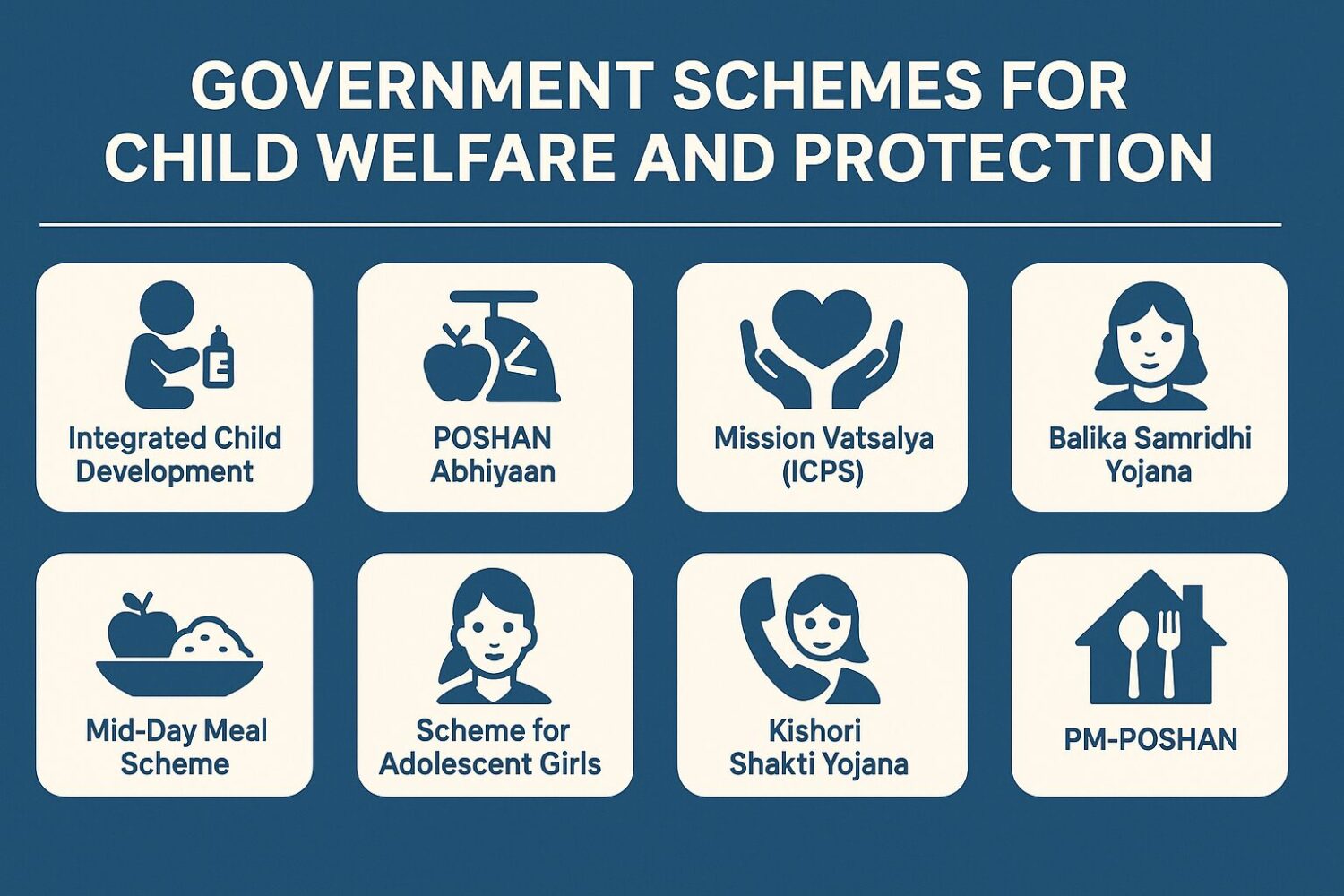
Updated on June 14, 2025
Over the decades, the government has launched a series of targeted schemes to ensure that every child-regardless of gender, socioeconomic status, or background-receives the care, protection, and opportunities needed to thrive.
These initiatives span nutrition, education, health, financial security, and legal protection, reflecting a holistic approach to child development. Special emphasis is placed on empowering the girl child and supporting those in vulnerable circumstances, ensuring that no child is left behind.
This article provides an in-depth look at the top 15 government schemes that are shaping the landscape of child welfare and protection in India today.
Below is a well-structured overview of the top government schemes dedicated to child welfare and protection in India.
| Scheme Name | Objective/Focus | Key Features/Benefits | Target Group/Eligibility | Implementing Agency/Ministry |
|---|---|---|---|---|
| Integrated Child Development Services (ICDS) | Early childhood care, nutrition, and development | Supplementary nutrition, immunization, health check-ups, pre-school education, referral services | Children (0-6 yrs), pregnant & lactating women | Ministry of Women & Child Development |
| Beti Bachao Beti Padhao (BBBP) | Improve child sex ratio, promote girl child survival and education | Girl children, families, and communities | Girl children, families, communities | MWCD, Health & Family Welfare, Education |
| POSHAN Abhiyaan (National Nutrition Mission) | Reduce malnutrition, improve nutrition outcomes | Real-time monitoring, community mobilization, dietary diversity, Poshan Vatikas | Children (0-6 yrs), adolescent girls, pregnant & lactating mothers | Ministry of Women & Child Development |
| Sukanya Samriddhi Yojana (SSY) | Financial security for girl child’s education and marriage | High-interest savings account, tax benefits, partial withdrawals for education | Girl child (<10 yrs), parents/guardians | Ministry of Finance |
| Mission Vatsalya (formerly ICPS) | Child protection, care, and rehabilitation | Institutional & non-institutional care, adoption, foster care, after-care, Childline 1098 | Children in need of care & protection | Ministry of Women & Child Development |
| PM CARES for Children Scheme | Support for COVID-19 orphans | Financial corpus, monthly stipend, education support, health insurance | Children orphaned due to COVID-19 | Ministry of Women & Child Development |
| Balika Samridhi Yojana | Promote girl child birth, education, and delayed marriage | Cash incentives at birth and during schooling, focus on education and delayed marriage | Girl children from BPL families | Ministry of Women & Child Development |
| CBSE Udaan Scheme | Support girls in STEM education | Awareness campaigns, enforcement of laws, support for girls’ education | Girl students in Class 11-12 (Science stream) | Central Board of Secondary Education |
| National Scheme of Incentive to Girls for Secondary Education (NSIGSE) | Promote secondary education for disadvantaged girls | Fixed deposit, accessible after passing Class 10 and turning 18 | SC/ST girls, unmarried, passed Class 8, enrolled in Class 9 | Ministry of Education |
| State-Specific Girl Child Schemes | Free online resources, mentoring, and financial assistance | Financial incentives for birth, education, and welfare (e.g., Ladli, Ladli Lakshmi, Bhagyalakshmi) | Girl children, state-specific criteria | State Governments |
| Kishori Shakti Yojana (KSY) | Empower adolescent girls through nutrition and education | Nutrition, health education, vocational training, life skills | Adolescent girls (11-18 yrs) | Ministry of Women & Child Development |
| Mission Shakti | Safety, security, and empowerment of women and girls | Promote girl child welfare at the state level | Women and girls | Ministry of Women & Child Development |
| Ladli Scheme & Kanya Kosh (Haryana) | Encourage the birth and welfare of girls in low-income families | Financial rewards, long-term deposits, support for education and health | Girl children in Haryana | Government of Haryana |
| Karnataka Bhagyashree Scheme | Promote the birth and education of the girl child | Conditional cash transfers for birth, immunization, school enrolment, and insurance maturity | Girl children from BPL families in Karnataka | Government of Karnataka |
| Dhanalakshmi Scheme | Promote girl child birth, education, and delayed marriage | Legal aid, safety measures, economic empowerment, and convergence of schemes | Girl children in selected blocks of pilot states | Ministry of Women & Child Development |
Integrated Child Development Services (ICDS)
The Integrated Child Development Services (ICDS) is India’s flagship programme for early childhood care, nutrition, and development, launched in 1975. It is one of the world’s largest community-based schemes, targeting children under six years, pregnant women, and lactating mothers. The scheme is centrally sponsored and operates primarily through Anganwadi Centres, which serve as the focal point for delivering a holistic package of services.
Objectives:
ICDS aims to improve the nutritional and health status of children in the 0–6 years age group, lay the foundation for proper psychological, physical, and social development, reduce mortality, morbidity, malnutrition, and school dropout rates, and enhance the capability of mothers to care for their children through nutrition and health education.
Key Services:
The scheme provides six core services:
- Supplementary nutrition: To bridge the gap between the recommended dietary intake and the actual average intake among children and women in low-income categories. Beneficiaries receive supplementary feeding for 300 days a year.
- Immunization: Vaccinations against major childhood diseases such as diphtheria, polio, pertussis, measles, tuberculosis, and tetanus. Pregnant women receive tetanus shots to reduce neonatal and maternal mortality.
- Health check-ups: Regular monitoring of children’s growth, antenatal care for pregnant women, postnatal care for nursing mothers, and treatment for common childhood illnesses.
- Referral services: Children and mothers identified with health problems are referred to appropriate health facilities.
- Pre-school non-formal education: Activity-based learning for children aged 3–6 years to promote cognitive and social development, encourage school enrolment, and reduce dropout rates.
- Nutrition and health education: Targeted at women aged 15–45 years, this service aims to build awareness about health, nutrition, and child care.
Beti Bachao Beti Padhao (BBBP)
Launched on January 22, 2015, Beti Bachao Beti Padhao (BBBP) is a flagship initiative of the Government of India aimed at addressing the declining child sex ratio and promoting the education and empowerment of the girl child. It is jointly implemented by the Ministry of Women and Child Development, the Ministry of Health and Family Welfare, and the Ministry of Education.
Objectives:
The core objectives of BBBP are to prevent gender-biased sex-selective elimination, ensure the survival and protection of the girl child, and promote education and participation of girls in society. The scheme seeks to challenge deep-rooted gender biases and discrimination, foster positive attitudes towards girls, and create an enabling environment for their development.
Key Strategies:
- Multi-sectoral action in districts with low child sex ratios, focusing on convergent efforts across health, education, and social sectors.
- Mass awareness campaigns to sensitize communities about the value of the girl child and the importance of her education and well-being.
- Community mobilization through events, social media campaigns (such as #SelfieWithDaughter), and involvement of local leaders and influencers.
- Strengthening enforcement of laws prohibiting sex-selective abortions and ensuring strict implementation of the Pre-Conception and Pre-Natal Diagnostic Techniques (PCPNDT) Act.
- Improving access to education for girls, reducing dropout rates, and supporting their participation in extracurricular and leadership activities.
POSHAN Abhiyaan (National Nutrition Mission)
POSHAN Abhiyaan, launched in March 2018, is India’s flagship programme to improve nutritional outcomes for children (0–6 years), adolescent girls, pregnant women, and lactating mothers. The scheme aims to reduce stunting, wasting, under-nutrition, and anemia through a multi-ministerial convergence mission.
Objectives:
- Reduce stunting, under-nutrition, and anemia among children, women, and adolescent girls.
- Achieve improvement in nutritional status through time-bound targets.
- Promote holistic nourishment and well-being.
Key Features:
- Use of technology for real-time monitoring and data collection (Poshan Tracker app).
- Community mobilization through Jan Andolan (People’s Movement), Poshan Maah, and Poshan Pakhwada to promote behavioural change.
- Focus on diet diversity, food fortification, and leveraging traditional knowledge, including the use of millets in meals.
- Setting up Poshan Vatikas (Nutri-gardens) to provide access to fresh fruits, vegetables, and medicinal plants.
- Integration with Anganwadi Services and other schemes under Mission Saksham Anganwadi and Poshan 2.0.
Achievements:
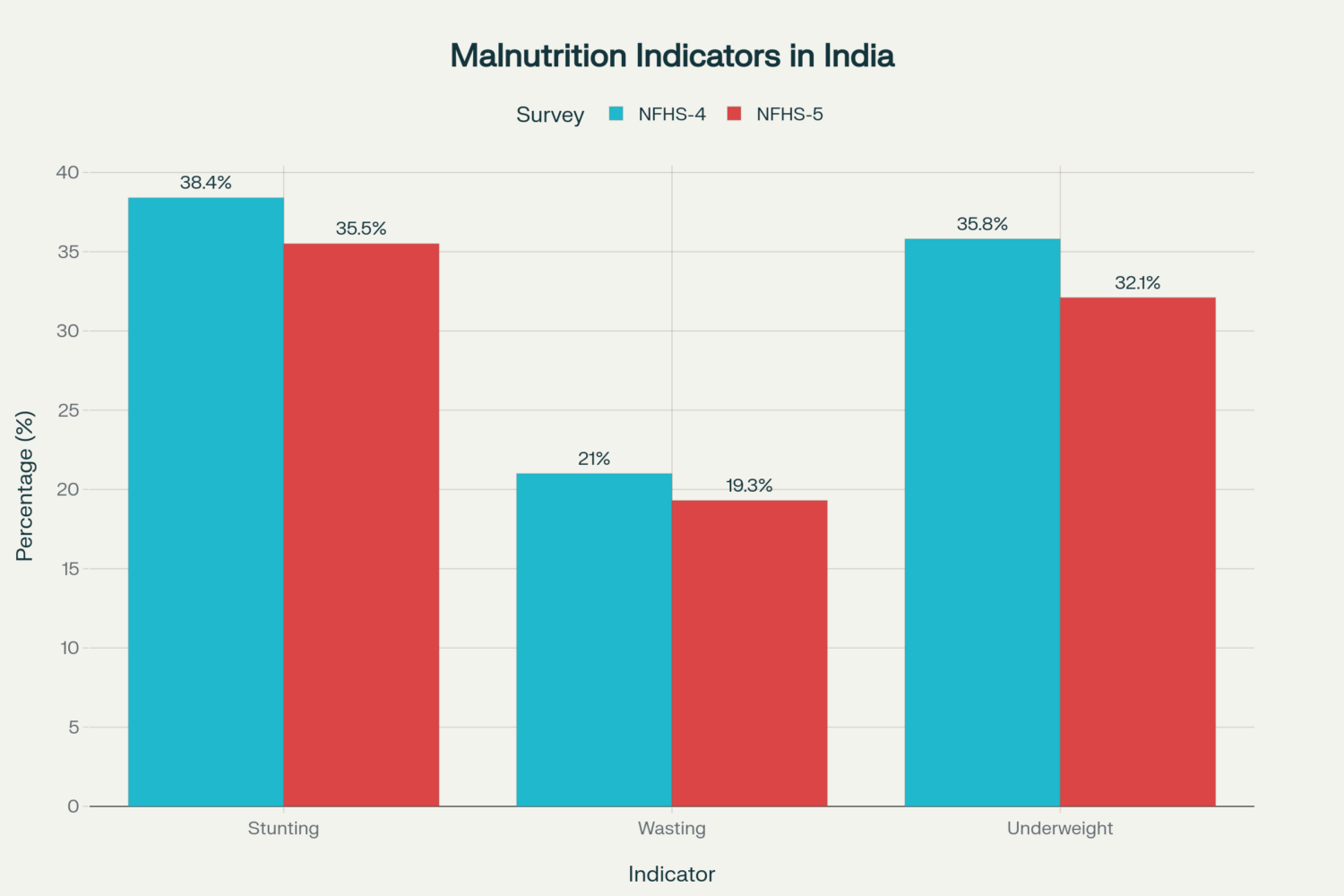
The scheme has contributed to a reduction in stunting, wasting, and underweight prevalence among children. Over 10 lakh field functionaries have been trained, and technological advancements have improved monitoring and transparency. Despite progress, challenges remain in addressing persistent malnutrition and ensuring last-mile delivery.
Sukanya Samriddhi Yojana (SSY)
Sukanya Samriddhi Yojana (SSY) is a government-backed savings scheme launched in 2015 as part of the Beti Bachao Beti Padhao initiative, aimed at securing the financial future of the girl child. The scheme encourages parents to save for their daughter’s education and marriage, offering attractive interest rates and tax benefits.
Eligibility and Features:
- An SSY account can be opened for a girl child below 10 years of age by her parents or legal guardians.
- Minimum deposit: ₹250 per year; maximum: ₹1.5 lakh per year.
- The account matures after 21 years from the date of opening or upon the girl’s marriage after age 18.
- Partial withdrawals (up to 50%) are allowed after the girl turns 18 for education expenses.
- The scheme offers one of the highest interest rates among small savings schemes (currently 8.2% p.a.), compounded annually.
- Deposits, interest earned, and maturity amount are all exempt from tax under Section 80C of the Income Tax Act (EEE status).
Benefits:
- Empowers families to plan for their daughter’s higher education and marriage without financial stress.
- Promotes the value of the girl child and encourages long-term investment in her future.
- The account can be transferred anywhere in India, ensuring flexibility for families who relocate.
Impact:
SSY has gained popularity across India, helping families build a secure financial corpus for their daughters. It complements other girl child welfare schemes by providing a direct financial incentive for education and empowerment.
Mission Vatsalya
Mission Vatsalya is a centrally sponsored scheme under the Ministry of Women and Child Development, aimed at ensuring the welfare and protection of children in difficult circumstances. It subsumes the erstwhile Child Protection Services (CPS) Scheme and aligns with the Sustainable Development Goals (SDGs) for child rights and protection.
Objectives:
- Provide holistic care, protection, and rehabilitation for children in need, including those in conflict with the law, street children, and those affected by HIV/AIDS.
- Promote family-based, non-institutional care as the preferred option, with institutional care as a last resort.
- Strengthen statutory and service delivery structures at all levels for child welfare and protection.
- Ensure the right to survival, development, protection, and participation for every child.
Key Components:
- Institutional care through Child Care Institutions (CCIs), Specialized Adoption Agencies, and Open Shelters.
- Non-institutional care through sponsorship, foster care, and aftercare services.
- Emergency outreach and support services, including counselling and mental health interventions.
- Capacity building for service providers, awareness campaigns, and community engagement.
- Monitoring and evaluation of child protection activities at the state and district levels.
Implementation:
Mission Vatsalya operates through a cost-sharing model between the Centre and States/UTS. It involves coordination with allied systems, local bodies, NGOs, and private sector partners to ensure comprehensive service delivery.
Significance:
The mission is crucial for building a robust child protection ecosystem in India, ensuring that vulnerable children receive timely support, rehabilitation, and opportunities for holistic development.
PM CARES for Children Scheme
The PM CARES for Children Scheme was launched on May 29, 2021, to support children who lost both parents, legal guardians, or adoptive parents due to the COVID-19 pandemic. The scheme ensures comprehensive care, protection, and empowerment of these children until they turn 23.
Objectives:
- Provide financial security, education, health insurance, and rehabilitation to COVID-19 orphans.
- Enable their well-being and self-sufficiency as they transition into adulthood.
Key Benefits:
- A corpus of ₹10 lakh is created for each eligible child, to be handed over at age 23.
- Monthly stipend between ages 18 and 23, derived from the corpus invested in the Post Office Monthly Income Scheme.
- School education support, including admission to Kendriya Vidyalayas or private schools, and a scholarship of ₹20,000 per annum for students in classes 1–12.
- Assistance for higher education, including educational loans with interest borne by the PM CARES Fund.
- Health insurance cover of ₹5 lakh under Ayushman Bharat Pradhan Mantri-Jan Arogya Yojana until age 23.
- Psychosocial support and counseling services to address emotional trauma.
Implementation:
The scheme is accessible through an online portal and is implemented by the Ministry of Women and Child Development in collaboration with other ministries and state/district administrations.
Impact:
PM CARES for Children has provided a vital safety net for thousands of children affected by the pandemic, ensuring they receive financial, educational, and emotional support to rebuild their lives.
If you need expansions for additional schemes, please specify which ones you would like next.
Balika Samridhi Yojana
Objective:
To improve the status of the girl child through education and delayed marriage.
Key Features:
- Cash incentives at birth and during school years
- Encourages school attendance and completion
CBSE Udaan Scheme
Objective:
To support girls aspiring for higher education in science and engineering.
Key Features:
- Free online resources
- Mentoring and academic support
- Financial assistance
National Scheme of Incentive to Girls for Secondary Education (NSIGSE)
Objective:
To encourage girls from disadvantaged backgrounds to continue secondary education.
Key Features:
- Fixed deposit in the girl’s name
- Amount accessible after passing class 10 and turning 18
State-Specific Schemes for the Girl Child
Examples:
- Mukhyamantri Kanya Suraksha Yojana (Bihar)
- Ladli Lakshmi Yojana (Madhya Pradesh)
- Delhi Ladli Scheme
- Mukhyamantri Rajshri Yojana (Rajasthan)
- Mazi Kanya Bhagyashree Scheme (Maharashtra)
- Chief Minister’s Girl Child Protection Scheme (Tamil Nadu)
Objective:
To provide financial incentives for the birth, education, and welfare of girl children.
Kishori Shakti Yojana (KSY)
Objective:
To empower adolescent girls (11-18 years) through nutrition, education, and vocational training.
Key Features:
- Health and nutrition education
- Life skills and vocational training
- Promotion of school attendance
Mission Shakti
Objective:
To enhance the safety, security, and empowerment of women and girls.
Key Features:
- Legal aid
- Safety and security measures
- Economic empowerment initiatives
Ladli Scheme and Kanya Kosh Scheme (Haryana)
Objective:
To promote the birth and education of girl children.
Key Features:
- Financial rewards and long-term deposits
- Support for education and health
Karnataka Bhagyashree Scheme
Objective:
To encourage the birth of girls in low-income households.
Key Features:
- Financial aid
- Health care coverage
- Scholarships for girls
Balika Samridhi Yojana (Reiterated)
Objective:
To provide cash incentives for the birth and education of the girl child.
Key Features:
- Delaying child marriage
- Encourages school completion
Key Objectives of Child Welfare Schemes
- Promote Gender Equality: Combat gender bias and support the girl child.
- Enhance Education: Provide scholarships and incentives for school attendance and higher education.
- Ensure Financial Security: Offer savings schemes and cash transfers for long-term welfare.
- Strengthen Child Protection: Establish care systems and legal protection for vulnerable children.
- Improve Health and Nutrition: Deliver integrated health, nutrition, and immunization services.
Conclusion
India’s government schemes for child welfare and protection reflect a holistic approach to nurturing the nation’s children.
By focusing on health, education, financial security, and protection, these programs aim to create a safer, healthier, and more equitable environment for all children, especially girls. Continued awareness and effective implementation of these schemes are crucial for building a brighter future for India’s next generation.
📩 If you notice any incorrect data in this guide or wish to share additional information, please write to us at info@indiansouls.in.
Over 2000+ Government Schemes & Policies Simplified
Indian Souls is your guide to government Schemes, scholarships, pensions, subsidies, job exams, and more. We break complex schemes into easy steps, helping every citizen take full advantage of the opportunities available.
No jargon. No confusion. Just useful info that helps indian citizen.





 Rajesh Tanwar
![12 Government Schemes for Urban Poor Must Know About [2025 Guide]](https://indiansouls.in/wp-content/uploads/2025/05/image-1.jpg "12 Government Schemes for Urban Poor Must Know About [2025 Guide] - Indian Souls")



)


%20–%20A%20Complete%20Guide)


)
)


)

%20–%202025%20Complete%20Guide:%20Latest%20Updates,%20How%20It%20Works%20&%20Who%20Qualifies)
,%20Eligibility%20&%20Status%20Check)


%20of%20₹%2025,000)
