
 Sudhir Singh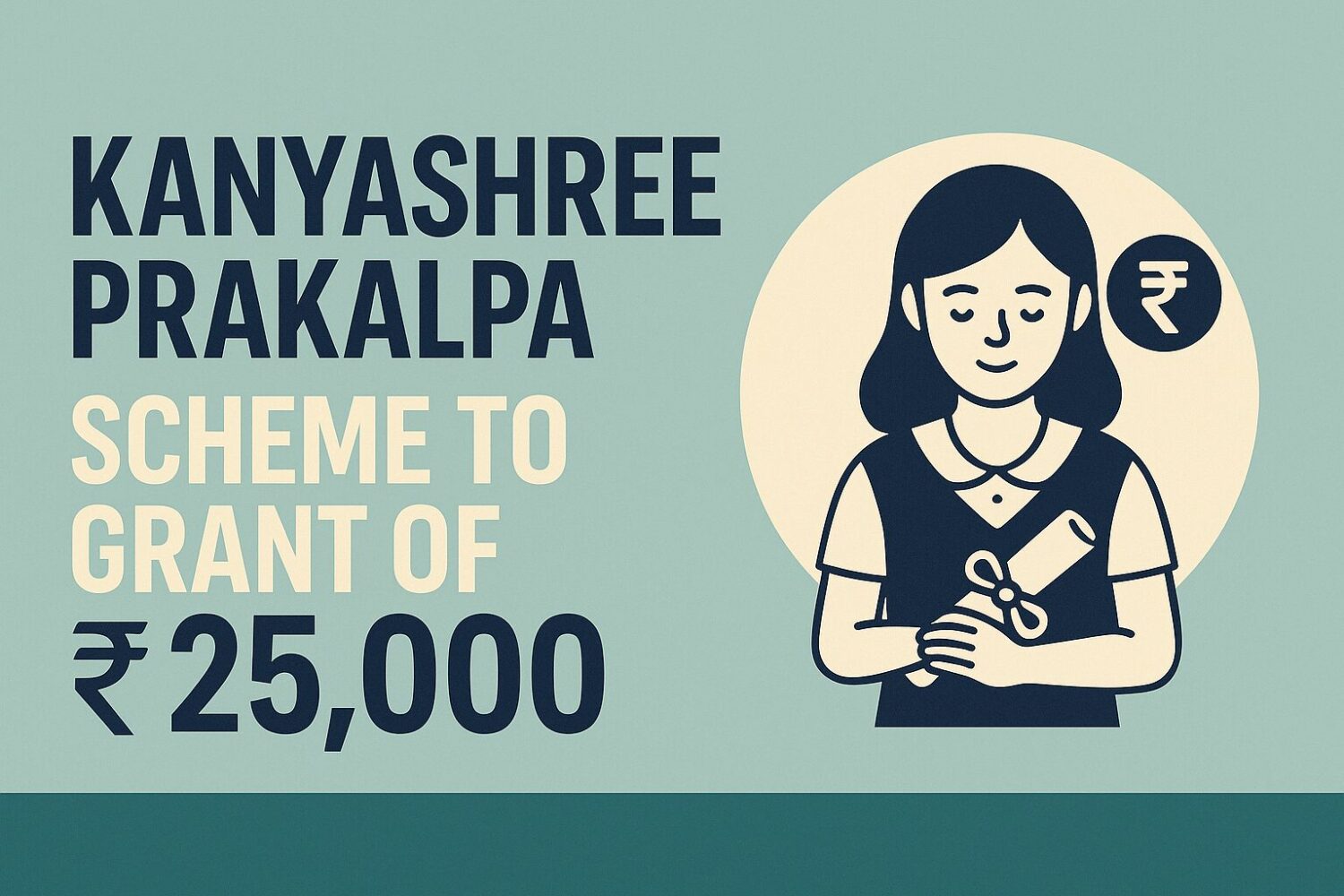
Updated on October 4, 2025
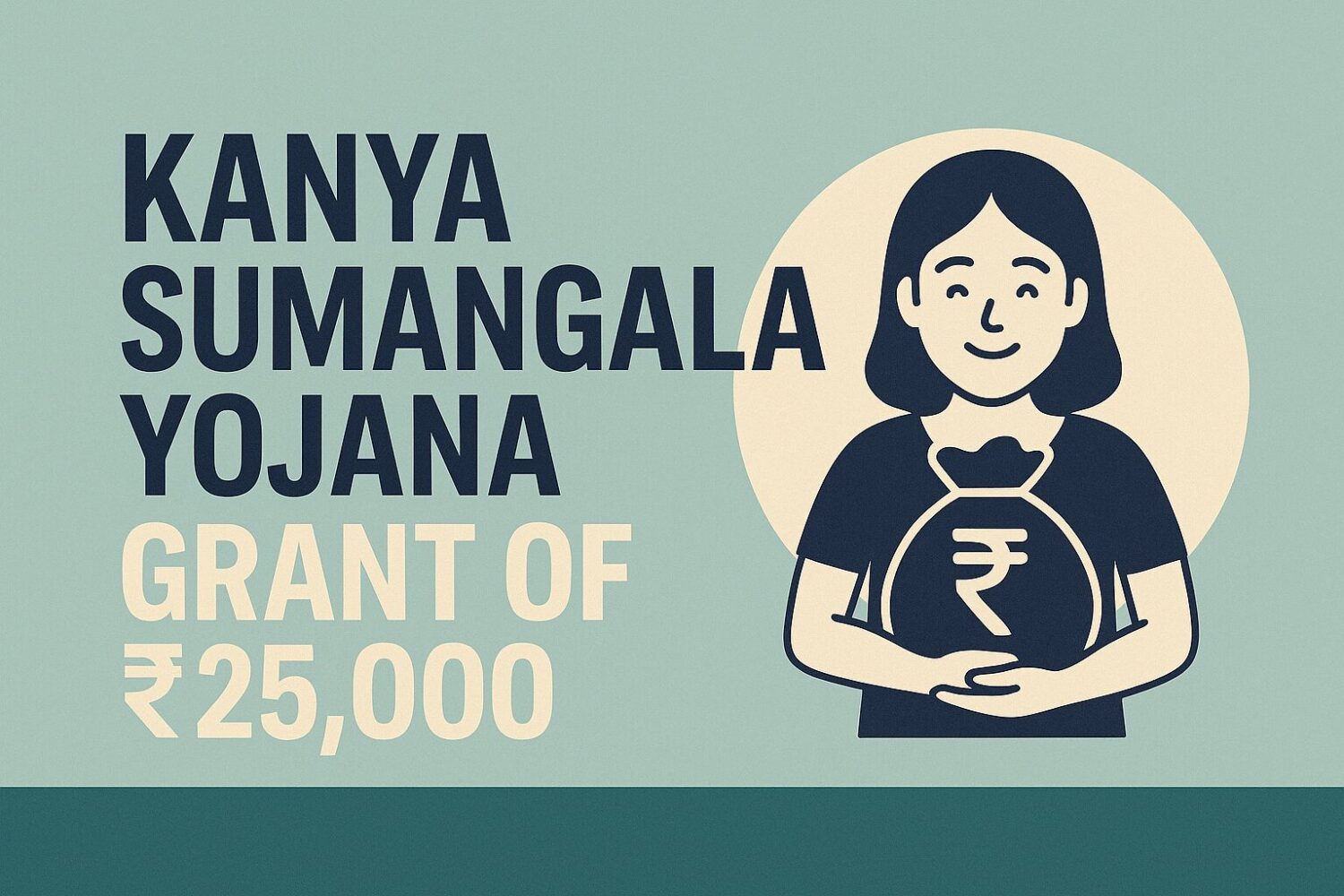
Kanyashree Prakalpa is the West Bengal government’s flagship scheme to financially support unmarried girls, encourage continued schooling, and discourage early marriage. In 2025, it continues in force, offering annual scholarships (K1) for girls aged 13-18 and a one-time grant (K2) of ₹ 25,000 when a girl turns 18 while studying. For a low-income family, this scheme can help a daughter stay in school and avoid financial pressure to marry early.
What is Kanyashree Prakalpa?
I have been writing and reviewing many welfare and education schemes for over fifteen years. Kanyashree Prakalpa stands out because it links education, gender equity, and social protection in one policy. Launched in 2013 by the Department of Women Development and Social Welfare, this scheme aims to improve the life chances of adolescent girls in West Bengal by giving them conditional cash support and making it attractive to continue education rather than drop out or marry early.
Some key features:
- It has two main benefit arms: K1 (annual scholarship) and K2 (one-time grant).
- The scheme works only for unmarried girls.
- It is targeted at girls from families whose annual income does not exceed ₹ 1,20,000 (with some exceptions).
- The girl must be a resident of West Bengal, enrolled in a recognized school, vocational or training course.
- Over the years, it has also built girls’ clubs in schools, community outreach, and social messaging against early marriage.
- In many districts, Kanyashree is actively linked with school efforts and local women’s groups to raise awareness.
Because of its dual social and financial focus, Kanyashree is often cited in policy circles as a model of conditional cash transfer with a gender focus.
Why does this Kanyashree Prakalpa matters to you?
If your family is low-income, and you have a daughter, Kanyashree can help in several real ways:
- The annual scholarship (K1) gives modest support so that the cost of schooling (books, uniforms, travel) becomes less burdensome.
- The one-time grant (K2) is larger and timed when she turns 18, often when she must decide whether to continue her education or marry. That money gives her a buffer.
- Because the scheme is tied to remaining unmarried and staying in education, it encourages families to support girls’ continued schooling.
- Over time, Kanyashree has contributed to a reduction in dropout rates among girls and even claims of zero dropout in primary grades in recent years.
- The scheme is layered with social messaging and empowerment efforts via clubs and peer groups.
From my visits to many blocks, I have met girls whose parents said, “If Kanyashree did not exist, I would have pulled her out of school to help at home or push for marriage.” That shows how much a modest incentive can shift choices in low-resource households.
Kanyashree Prakalpa Recent 2025 updates & news
- In August 2025, the Chief Minister announced that female primary school dropouts in West Bengal had fallen to zero, attributing part of the success to Kanyashree.
- The scheme has now reportedly benefited 93 lakh girls to date, across school, college and beyond levels.
- Dropout rates for girls in secondary education have dropped from over 16% earlier to about 2.9%, and in higher secondary from 15.4% to about 3.2%.
- The government emphasizes that Kanyashree now covers schooling (K1), college/training (K2), and higher education (K3) phases.
- The scheme has received international recognition, including UNESCO commendation.
These updates show that Kanyashree continues to evolve and expand its reach.
Kanyashree Prakalpa Eligibility: Who can apply
To take advantage of Kanyashree, a girl must satisfy the following:
- She must be a permanent resident of West Bengal.
- She must be unmarried at the time of application.
- Her family’s annual income must not exceed ₹ 1,20,000. This income limit does not apply to orphans, girls with a disability of 40% or more, or girls living in Child Care Institutions registered under the Juvenile Justice Act.
- For K1 (annual scholarship): Age between 13 and b8 years (i.e. 13 to 17 years 11 months), enrolled in class VIII to XII or equivalent vocational/training program.
- For K2 (one-time grant): She must be aged 18 to 19, unmarried, and pursuing higher study or vocational / training activity at that time.
- For K3 (if applicable): Only those who hold a K2 ID can apply. The student must have passed graduation (with minimum marks) and be admitted to postgraduate courses.
In short, the scheme is designed to help girls through adolescence and into early adulthood, conditional on education and non-marriage.
Kanyashree Prakalpa Benefits: What you gain
Below is a clear breakdown of the benefits:
| Scheme arm | Age / Condition | Benefit / Amount | Notes / Conditions |
|---|---|---|---|
| K1 (annual scholarship) | Girls aged 13 to <18 years, unmarried, in school/training | ₹ 500 per year | A larger lump sum to help with higher studies or the delay of marriage |
| K2 (one-time grant) | Girls aged 18 to 19 years, unmarried, in higher education / vocational training | ₹ 25,000 | Girls who hold a K2 ID, graduated, and admitted to PG courses |
| K3 (postgraduate support) | Girls who hold a K2 ID, graduated, and are admitted to PG courses | Monthly stipend (amounts vary by discipline) | Not always active; depends on scheme rules and eligibility |
Some additional benefits:
- Social recognition: Kanyashree girls are often publicized, given awards or exposure, which boosts confidence.
- Club activities: Girls’ clubs in schools provide peer support, mentoring and life skills sessions.
- Continuity of support: A girl stays in the scheme across years (for K1 renewal) until she qualifies for K2.
Although amounts are modest, they send a clear social signal: you matter, your education matters.
How to apply Kanyashree Prakalpa? Step-by-step guide
From my many years helping citizens understand such schemes, here is a simplified process you can follow:
Online / portal route
- Visit the official Kanyashree Prakalpa portal and locate the fresh / renewal application section (K1 or K2).
- Register as a new user or log in if you already have a Kanyashree ID.
- Fill in personal details: name, date of birth, school/course, parents or guardians, address, Aadhaar, and family income.
- Upload required documents: birth certificate, income certificate, school ID or enrollment proof, unmarried declaration, bank account details, and passport photo.
- Apply before the stipulated deadline.
- You may track status using the Track Application section by entering your application ID and DOB.
Offline / school route
- Obtain the Kanyashree form (paper) from your school or local implementing institution (Head of Institution).
- Fill the form with the required details and attach copies of documents.
- Submit the form to your school, which forwards it to the block/district for verification.
- Once approved, funds or grants will be transferred to your bank account.
Points to note
- For renewing K1, you simply log in and apply; no fresh registration is needed.
- K2 applications are open only during the year you turn 18 / 19, within that window.
- The portal also has an import/fetch data feature from school databases (for girls left out) to reduce omissions.
- Head of Institutions (HoIs) play a role in forwarding, verifying, and sanctioning applications.
Kanyashree Prakalpa Timeline: How long does it take
Based on observed practices and citizen reports:
- Filling form and uploading: if documents are ready, 30 minutes to 1 hour.
- Verification at school and block: typically 5 to 10 days, sometimes shorter in efficient blocks.
- Sanction & approval: a few more days, depending on district workflow.
- Disbursement: after sanction, the scholarship or grant amount is transferred to the bank account; it can take 7–15 days.
- Renewals: generally quicker if your records are already verified and active.
In normal conditions, from application to receiving benefit may take two to three weeks. In remote or overloaded administrative areas, it may stretch to a month or more.
Quotes from the field
“I had to convince my parents not to marry me early. Kanyashree gave us hope. When I got that ₹ 500 yearly, it was small, but it meant they trusted my schooling mattered.”
“Our school helps fill the Kanyashree forms early in each academic year. But in some years the verification gets delayed, so girls miss when they turn 18. That is tragic for K2.”
Such voices reveal the real-life impact and the stress points.
Kanyashree Prakalpa Common Questions (Q & A)
Q If I turn 18 after the deadline, can I apply for a K1 one more time?
A No. Once you cross 18, you are no longer eligible for K1. You must apply for K2 within your 18–19-year window.
Q My family income is slightly above ₹ 1,20,000. Can I still apply?
Not for general cases. But if you are orphaned, or have a disability of 40 % or more, or live in a Child Care Institution (J.J. Home), the income limit is waived.
Q What if my K1 application was rejected?
You can check the reasons once the portal allows status view. If there is a correction window, you should fix discrepancies and reapply or appeal through the school/block office.
Q If I receive K2, can I still receive further help for postgraduate study?
A possibly under K3 (if scheme is active), but many times K3 is limited or dependent on additional rules. Check the portal for K3 eligibility in your year.
Q Can I switch schools or shift location and still retain the benefit?
A Yes, since your identity is recorded. But you must ensure your records transfer, your new school is recognized, and the portal is updated.
Q What if I don’t have a bank account or have no access to the portal/internet?
You should get a bank account (often no cost for basic accounts) and approach the school or block staff to help you fill via institution computers or assistance centers.
Q Will marriage before 18 disqualify me forever?
A Yes. If you marry before 18, you will lose eligibility for a K1 or K2.
Risks, challenges & suggestions (from experience)
- Delayed verification and sanctioning: girls may miss the K2 window.
- Omission in data import: Some eligible girls may be left out of school databases.
- Unawareness in remote areas: Some girls or families may not even know about the scheme.
- Document issues: a lack of a valid income certificate, birth record, or bank account can block the application.
- Disparity across blocks: administrative capacity differs; some areas process fast, others lag.
To reduce these, local NGOs or community volunteers can help spread awareness, scan documents in advance, assist with forms, and follow up with officials. District administrations should hold regular outreach camps.
Final reflection
Kanyashree Prakalpa is more than a scholarship scheme; it is a social signal that girls’ education must continue and child marriage must be resisted. The money amounts are modest, but their impact can tip crucial decisions in low-income families. Yet successful delivery depends on timely verification, administrative capacity, and community outreach. If you or someone you know is eligible, do not delay—apply early, keep proof, follow up, and raise your voice if there is a delay.
📩 If you notice any incorrect data in this guide or wish to share additional information, please write to us at info@indiansouls.in.
Over 2000+ Government Schemes & Policies Simplified
Indian Souls is your guide to government Schemes, scholarships, pensions, subsidies, job exams, and more. We break complex schemes into easy steps, helping every citizen take full advantage of the opportunities available.
No jargon. No confusion. Just useful info that helps indian citizen.






 Rajesh Tanwar
![12 Government Schemes for Urban Poor Must Know About [2025 Guide]](https://indiansouls.in/wp-content/uploads/2025/05/image-1.jpg "Kanyashree Prakalpa Government scheme to grant (K2) of ₹ 25,000 - Indian Souls")



%20को%20ड्रोन%20खरीदने%20के%20लिए%20आर्थिक%20मदद)


