
 Sudhir Singh
Updated on June 15, 2026
PM Mudra Yojana has been running since 2015 and has disbursed over 57.79 crore loans worth Rs 40.07 lakh crore across India. Applications are open right now for 2026.
If you run a small business, a street shop, a repair service, a beauty parlour, a food cart, or any non-farm income activity and need money to grow it, Mudra is the scheme for you. No collateral required for most categories.
What Is PM Mudra Yojana?
Pradhan Mantri Mudra Yojana (PMMY) provides loans to micro and small enterprises through banks, microfinance institutions (MFIs), and non-banking financial companies (NBFCs). MUDRA: Micro Units Development and Refinance Agency, is a subsidiary of SIDBI that refinances these lending institutions.
You do not apply to MUDRA directly. You go to a bank, MFI, or NBFC and apply for a Mudra loan there.
Three Loan Categories
Shishu: Up to Rs 50,000. For very small businesses just starting. Street vendors, small artisans, mobile repair shops, small food businesses.
Kishore: Rs 50,001 to Rs 5 lakh. For established small businesses needing to expand. Grocery stores, small manufacturers, service providers with some track record.
Tarun: Rs 5 lakh to Rs 10 lakh. For more established micro enterprises looking to scale.
Tarun Plus (added in 2024): Rs 10 lakh to Rs 20 lakh. For Tarun borrowers who have successfully repaid a previous Mudra loan and need higher capital to grow further.
Who Can Apply?
Any Indian citizen running or planning to run a non-farm income-generating activity. The key word is non-farm, agricultural loans go through different schemes like PM-KISAN or KCC. Manufacturing, trading, and service sector businesses qualify.
Specific eligible activities include: small manufacturing units, shopkeepers, fruit and vegetable vendors, artisans, food processors, repair shops (mobiles, electronics, vehicles), tailors, salons, transport operators with small vehicles, and many more.
Women entrepreneurs, SC/ST borrowers, and first-time borrowers get priority processing at most banks.
No Collateral for Shishu and Kishore
For Shishu and Kishore loans, banks cannot demand collateral or a guarantor. This is a core feature of the scheme. If a bank branch asks you for property papers or a guarantor for a Mudra Shishu or Kishore loan, report it to the bank’s regional office or to the RBI Banking Ombudsman.
For Tarun and Tarun Plus, some banks may ask for a simple guarantee or basic business documents, but heavy collateral requirements are still not standard practice under the scheme guidelines.
How to Apply
Online: Go to udyamimitra.in, this is the official government portal for Mudra loans. You fill a form, upload documents, and select a bank. Your application goes to the chosen bank for processing.
In person: Walk into any public sector bank (SBI, PNB, Bank of Baroda, Canara Bank, etc.), a scheduled commercial bank, a regional rural bank, or an MFI and ask for a Mudra loan. Tell them the category you are applying under (Shishu, Kishore, Tarun, or Tarun Plus).
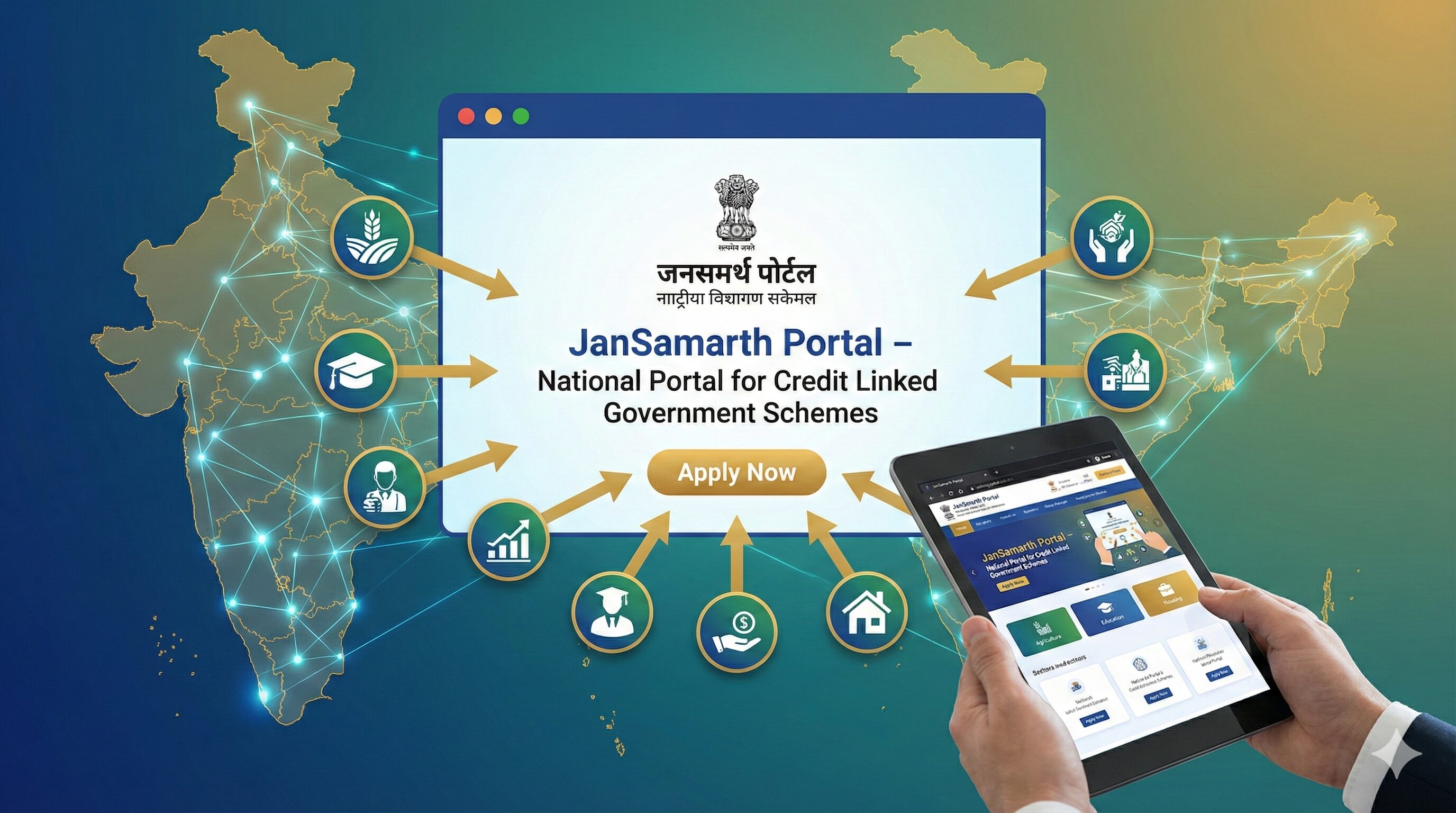
Jan Samarth Portal: jansamarth.in also processes Mudra applications alongside other government-linked loan schemes.
Documents Required
For Shishu loans (up to Rs 50,000), documentation is minimal:
For Kishore and above:
Interest Rate
There is no fixed Mudra interest rate set by the government. Each lender sets its own rate within a reasonable band. Public sector banks typically charge 8.5% to 12% per annum for Mudra loans depending on the category and the borrower’s profile.
Compare rates across at least two banks before accepting. Udyamimitra.in lets you compare lender options online.
Mudra Card: What It Is
When you get a Mudra loan, many banks issue a Mudra Card, essentially a debit card linked to your loan account with a credit limit up to your sanctioned Mudra amount. You can draw money from it as needed rather than taking the full loan amount upfront. This reduces interest cost because you only pay interest on what you actually withdraw.
Ask your bank about the Mudra Card option when you apply.
Common Reasons Applications Get Rejected
Low CIBIL score: Even for Mudra loans, many banks check your credit score. If you have defaulted on any previous loan, resolve it before applying. A score below 650 makes approval harder.
No bank account or inactive account: Your loan disbursement goes to your bank account. If it is dormant, reactivate it first.
Incomplete documents: Shishu loans get rejected most often because applicants do not bring even basic address proof. Carry Aadhaar and a utility bill minimum.
Urban branch hesitation: Some bank branches in cities are reluctant to process small Mudra loans because the paperwork-to-profit ratio is low for the branch. If one branch refuses without a clear reason, try another branch or go to a Regional Rural Bank (RRB) or MFI.
Mudra Helpline and Portal
Udyamimitra portal: udyamimitra.in
MUDRA helpline: 1800-180-1111 (toll-free, 9 AM to 6 PM Monday to Saturday)
You can also email helpdesk@mudra.org.in for loan-related queries.
📩 If you notice any incorrect data in this guide or wish to share additional information, please write to us at info@indiansouls.in.
Over 2000+ Government Schemes & Policies Simplified
Indian Souls is your guide to government Schemes, scholarships, pensions, subsidies, job exams, and more. We break complex schemes into easy steps, helping every citizen take full advantage of the opportunities available.
No jargon. No confusion. Just useful info that helps indian citizen.








![12 Government Schemes for Urban Poor Must Know About [2025 Guide]](https://indiansouls.in/wp-content/uploads/2025/05/image-1.jpg "12 Government Schemes for Urban Poor Must Know About [2025 Guide] - Indian Souls")



 Sudhir Singh














%20–%20Rates,%20How%20to%20Open%20and%20Benefits)


%20–%20A%20Complete%20Guide)

%202026)

%20–%202025%20Complete%20Guide:%20Latest%20Updates,%20How%20It%20Works%20&%20Who%20Qualifies)

)


